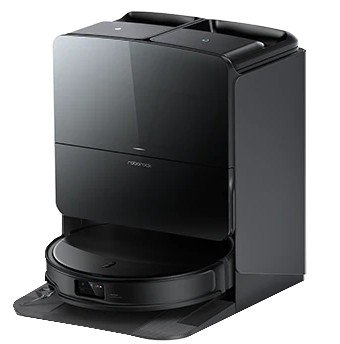
My opinion about the Roborock Saros Z70
If your priority is to keep your home clean as efficiently as possible, you have pets that shed a lot of hair, or you’re looking for the best value for money, this isn’t the right robot for you. The extra cost doesn’t really make sense in everyday use and ends up offering an experience that feels less practical than its price would suggest.
However, if you’re passionate about technology, you’re an early adopter, and budget isn’t a concern, the Roborock Saros Z70 can be a very attractive option. Its futuristic concept and unique features make it a standout product, different from anything currently available on the market.
Roborock Saros Z70: Pros & Cons Analysis
Main Advantages
1 What Agent AI Makes Possible
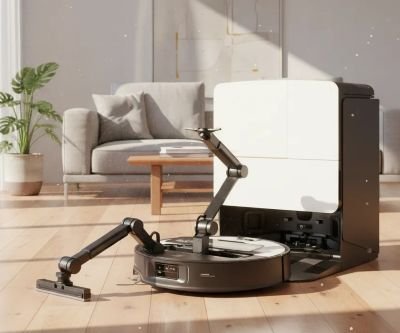
The Z70’s Agent Artificial Intelligence allows it to do something most robots simply can’t: when it encounters an object like a sock or a toy, it doesn’t just go around it or get stuck. It identifies it, grabs it, and moves it out of the way to continue cleaning.
This different approach to obstacles is what largely justifies its higher price compared to models like the Dreame X50 or the Saros 10R.
2 Lower Profile, More Areas Cleaned
Many modern pieces of furniture have very little space underneath. Taller robots with LiDAR turrets simply can’t fit, leaving those areas uncleaned.
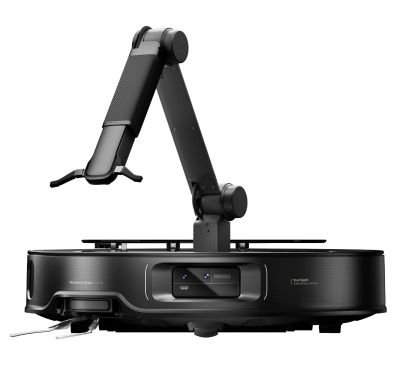
With a height of just 7.98 cm, the Roborock Saros Z70 can easily pass under sofas, beds, and low furniture. By removing the top-mounted LiDAR, it reaches places other robots simply can’t.
3 AdaptiLift™: Adapts to Your Floors
The Z70 isn’t just low-profile—it can also lift itself when needed. Thanks to the AdaptiLift™ system, the robot can automatically raise or lower its chassis instead of relying solely on its wheels.
This allows it to overcome thresholds and height differences of up to 4 cm, which is crucial in homes with high door frames or uneven flooring. It also adjusts its height on carpets, improving suction and preventing unnecessary battery drain.
4 More Precise 3D Navigation
Replacing traditional LiDAR with the StarSight™ Autonomous System 2.0 marks a major shift in how the Z70 navigates.
Instead of relying on simple cameras or LiDAR that “sees” in a single plane, StarSight uses 3D Time-of-Flight (ToF) technology. This allows it to understand depth and recognize surrounding objects more accurately.
5 Works Well Even in Low Light
A common concern with these systems is how they perform in low-light environments. Unlike traditional LiDAR, StarSight 2.0 doesn’t rely solely on ambient light.
To compensate, it uses infrared light and supporting systems that allow it to move under furniture or in dark areas. In testing, navigation performance is solid and consistent in most situations.
However, some users report that in unusual or challenging lighting conditions, it can become slightly more disoriented than turret-based LiDAR models. Still, in everyday use, it performs without major issues.
6 Object Recognition with Smart Reactions
The Roborock Z70’s navigation system can identify up to 108 different types of objects. This is key for determining the right action in each situation. A table leg, pet waste, and a sock all require different responses.
Thanks to this recognition, the robot decides whether to avoid the obstacle, go around it, or activate its mechanical arm to move it. Through the app, users can also teach it up to 50 custom objects, allowing the robot to better adapt to each home and improve over time.
7 The OmniGrip™ Mechanical Arm
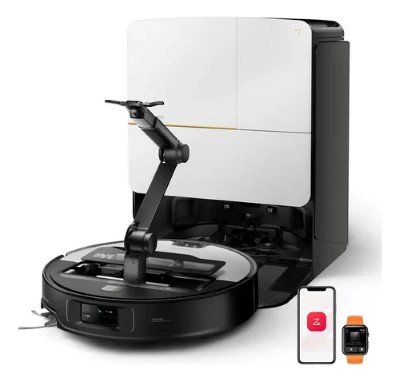
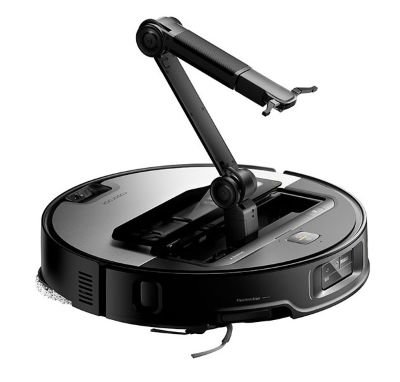
The biggest differentiator of the Roborock Z70 is the OmniGrip™ mechanical arm. This feature completely changes the robot’s role: it doesn’t just clean—it can interact with objects in its environment.
The arm has five axes of movement, allowing it to extend, rotate, and grab objects. When not in use, it folds entirely into the chassis without affecting cleaning performance or design. It’s designed to move lightweight objects of up to 300 grams, such as socks, small toys, loose cables, or paper.
In practice, its performance is mixed. In controlled tests it works well, but in real-world use, the success rate is around 50% for certain objects. Shape plays a major role: very flat or smooth items are harder for the gripper to handle. Still, it’s an innovative concept that clearly sets it apart from other robot vacuums.
8 Cleaning Performance: Power That Needs Context
The Z70 advertises a suction power of 22,000 Pa, an extremely high figure even compared to previous flagship models like the S8 MaxV Ultra, which offers 10,000 Pa. On paper, the jump is huge.
However, more power doesn’t always translate into proportionally better cleaning. Beyond a certain point, what really matters is brush design, airflow, and how effectively dirt is agitated.
On carpets, for example, tests show that despite its raw power, the Z70 can perform below the Saros 10R in deep dirt extraction, especially fine sand. This is mainly due to the cleaning head design, not a lack of suction.
9 Active Hair Cutting: Less Maintenance
A major advantage of the Roborock Saros Z70 is the active hair-cutting system integrated into the brush. This mechanism cuts long hair while cleaning, preventing it from tangling around the roller.
This significantly reduces manual brush cleaning and helps maintain consistent performance. It’s also present in the 10R and is essential for truly autonomous cleaning, especially in homes with pets or long hair.
10 More Effective and Complete Mopping
Unlike the S8 series, which used the VibraRise vibrating plate system, the Z70—like the rest of the Saros lineup—uses a dual rotating mop system. In practice, this change improves mopping performance, especially on dried stains, thanks to constant friction.
The Z70 also features the FlexiArm Mop, an extendable mop inherited and improved from previous models, which deploys to clean edges and corners. This allows better coverage and reduces areas that used to remain uncleaned.
11 Base Station 4.0: Everything Cleans Itself
The Z70 relies heavily on its base station, which is why this point is crucial. The base doesn’t just recharge the robot—it handles almost all maintenance tasks.
One of the most important upgrades is mop washing with 80 °C water. At this temperature, it removes not only visible dirt but also bacteria and odors. Hot water is especially useful in kitchens, where grease and oil residues require high heat to be properly cleaned.
The station also cleans itself. It uses hot water and internal brushes to keep the washing tray clean, preventing residue buildup—a common issue with many automatic bases. Finally, it includes a detergent tank with automatic dosing, so there’s no need for manual mixing.
Points to Consider
1 Waste Management and Autonomy: Its Weakest Point
To fit a mechanical arm into such a low and compact robot, the Z70 had to sacrifice something—and that sacrifice was the internal tanks.
The dustbin is very small. In homes with pets—especially large dogs that shed a lot—it can fill up very quickly. When that happens, the robot has to return to the base repeatedly to empty itself, slowing down cleaning, draining more battery, and making the process less efficient.
The same applies to water. The internal tank is so small that the robot constantly depends on the base station to re-wet the mops. In large homes, this means more pauses and more return trips.
2 Compromises in the Brush System
While the Saros 10R uses the DuoDivide dual-brush system, designed to better handle hair and prevent tangles, the Z70 uses a different configuration due to space limitations. It includes rubber brushes and active hair cutting, which helps with maintenance, but it doesn’t achieve the same deep agitation on carpets.
3 Functional or Just a Flashy Idea?
The OmniGrip mechanical arm divides opinions. For some, it’s the logical next step in the evolution of home robots. For others, it’s an expensive gimmick designed to solve a simple problem: picking things up from the floor.
The most common criticism is that many of these obstacles could be avoided with better habits or stricter avoidance systems. Still, for those who want truly autonomous cleaning without preparing the house beforehand, the arm makes sense. Being able to clear the path on its own is that final step toward full home automation.
4 Price vs. Real Value
The Z70 is significantly more expensive than the Saros 10R, with a price difference that can exceed $1,000. That gap isn’t due to better cleaning performance, but mainly to the inclusion of the mechanical arm.
In addition, forum posts and reviews mention early hardware failures, raising concerns about long-term reliability compared to more established competitors.
5 Mechanical Reliability: The Risk of Being a Pioneer
As a first-generation technology, the mechanical arm also introduces new potential points of failure. Some users have reported cases where the arm doesn’t retract properly or gets stuck due to dirt or minor manufacturing defects, forcing manual intervention.
Additionally, the process of detecting an object, deciding what to do, grabbing it, and moving it takes time. This makes overall cleaning slower compared to traditional robots that simply avoid obstacles. It’s the cost of betting on a new and more complex feature.
Side-by-Side Comparison
|
▼ General Information
|
|||
| Model |

|
|
|
|---|---|---|---|
| Name | Roborock Saros Z70 | Roborock Saros 10R | |
| Brand | Roborock | Roborock | |
| Price | €1299.99 | €1599.99 | |
| Rating |
88
Very Good
|
90
Excellent
|
|
| Warranty | 2 years | 2 years | |
| Release | 2025 | 2025 | |
| Best Deal | View Offer | View Offer | |
|
▼
Cleaning Performance
|
|||
| Suction power | 22,000 Pa | 22,000 Pa | |
| Motor | High-efficiency digital motor with optimized airflow | High-performance digital motor with HyperForce™ airflow system | |
| Modes | Quiet, Balanced, Turbo, Max | Quiet, Balanced, Turbo, Max | |
| Noise | ≈ 60–67 dB | ≈ 60–65 dB | |
| Carpet boost | Yes | Yes (automatic boost on carpets) | |
| Pet hair performance | Very good (optimized for pet hair) | Excellent (zero-tangle system optimized for pet hair) | |
|
▼
Mopping System
|
|||
| Mopping | Yes | Yes | |
| Mopping type | Dual rotating mop pads system | Dual rotating mop pads system | |
| Mop lifting | Yes (automatic lift on carpets) | Yes (automatic lift up to ~22 mm on carpets) | |
| Clean water tank | ≈ 4.0 L (base station) | ≈ 4.0 L (base station) | |
| Dirty water tank | ≈ 3.0 L (base station) | ≈ 3.0 L (base station) | |
| Mop self cleaning | Yes (hot water mop washing) | Yes (hot water mop washing in dock) | |
| Floor drying | Yes (hot air drying in dock) | Yes (hot air drying in dock) | |
| Detergent auto dosing | Yes | Yes | |
|
▼
Base Station Automation
|
|||
| Self emptying dust | Yes | Yes | |
| Base bag capacity | ≈ 2.5–3.0 L | ≈ 2.7 L | |
| Hands free operation | Up to ≈ 7–8 weeks | Up to ≈ 7–8 weeks | |
| Automatic charging | Yes | Yes | |
|
▼
Navigation & Intelligence
|
|||
| Navigation | StarSight™ Autonomous System 2.0 (3D ToF + AI) | StarSight™ Autonomous System 2.0 (3D ToF + RGB camera + AI) | |
| Obstacle avoidance | AI-based obstacle recognition | AI-based obstacle detection and avoidance | |
| Object recognition | Yes (up to ~108 objects) | Yes (up to ~108 objects) | |
| Multi floor mapping | Yes | Yes | |
| No go zones | Yes | Yes | |
|
▼
Battery & Autonomy
|
|||
| Runtime | Up to ≈ 180–240 min | Up to ≈ 180 min | |
| Battery capacity | ≈ 6,400 mAh | 6,400 mAh lithium-ion | |
| Charging time | ≈ 2.5–4 h | ≈ 2.5 h | |
| Auto recharge resume | Yes | Yes | |
|
▼
App & Connectivity
|
|||
| Mobile app | Roborock App (iOS & Android) | Roborock App (iOS & Android) | |
| Voice assistant | Alexa & Google Assistant | Alexa & Google Assistant | |
| Room based cleaning | Yes | Yes | |
| Zone cleaning | Yes | Yes | |
|
▼
Dimensions & Weight
|
|||
| Robot dimensions | ≈ 353 × 350 × 79.8 mm | ≈ 353 × 350 × 79.8 mm | |
| Base dimensions | ≈ 381 × 475 × 488 mm | ≈ 381 × 475 × 488 mm | |
| Weight | ≈ 4.9 kg (robot) / ≈ 10–12 kg (station) | ≈ 4.9 kg (robot) / ≈ 10–11 kg (station) | |
| Cliff sensors | Yes | Yes | |
Final Verdict: Who Should Buy the Roborock Saros Z70?
The Saros Z70 is an ambitious and distinctive robot. It introduces new technologies that clearly show the direction of home robotics, especially in navigation and automation.
However, that innovation comes at a cost. To integrate the mechanical arm, the Z70 reduces the capacity of its internal tanks and compromises part of its performance on carpets. In everyday use, this means that, despite being more advanced and more expensive, it doesn’t always clean better than the Saros 10R.
Ultimately, the Z70 is ideal for those who prioritize cutting-edge technology and full autonomy. For most users looking for efficient, practical, and hassle-free cleaning, the Saros 10R remains the more balanced choice.
Recommended For
Users who want cutting-edge robotics, maximum automation, and don’t mind some trade-offs in cleaning efficiency
Not Ideal If
You prioritize fast, uninterrupted cleaning, large dust capacity, or top carpet performance
Overall Value
Innovative and futuristic, but better suited as a tech showcase than a pure cleaning upgrade